How IoT Helps Manage Risk in the Built Environment

Risk in the built environment is often managed reactively.
Something happens → it’s identified → it’s fixed.
But the reality is:
a lot can happen between checks.
In many cases, issues develop slowly — building into more significant problems over time.
From reactive to proactive
This is where IoT plays a critical role.
By continuously monitoring conditions, IoT enables organisations to:
- Identify issues earlier
- Respond faster
- Reduce the likelihood and impact of failure
⟫ The shift is simple but powerful:
From reacting to events → to managing risk proactively
The reality of stretched resources
Service and technical teams are more stretched than ever.
Even in organisations with large teams:
- Coverage is not continuous
- Site visits are periodic
- Priorities shift constantly
⟫ Which means:
Blind spots are inevitable
This becomes even more challenging across:
- Multi-site estates
- Mixed building types
- Varying infrastructure quality
Where risk typically sits
Many risks develop in areas that are:
- Out of sight
- Not routinely checked
- Or slow to change — until they aren’t
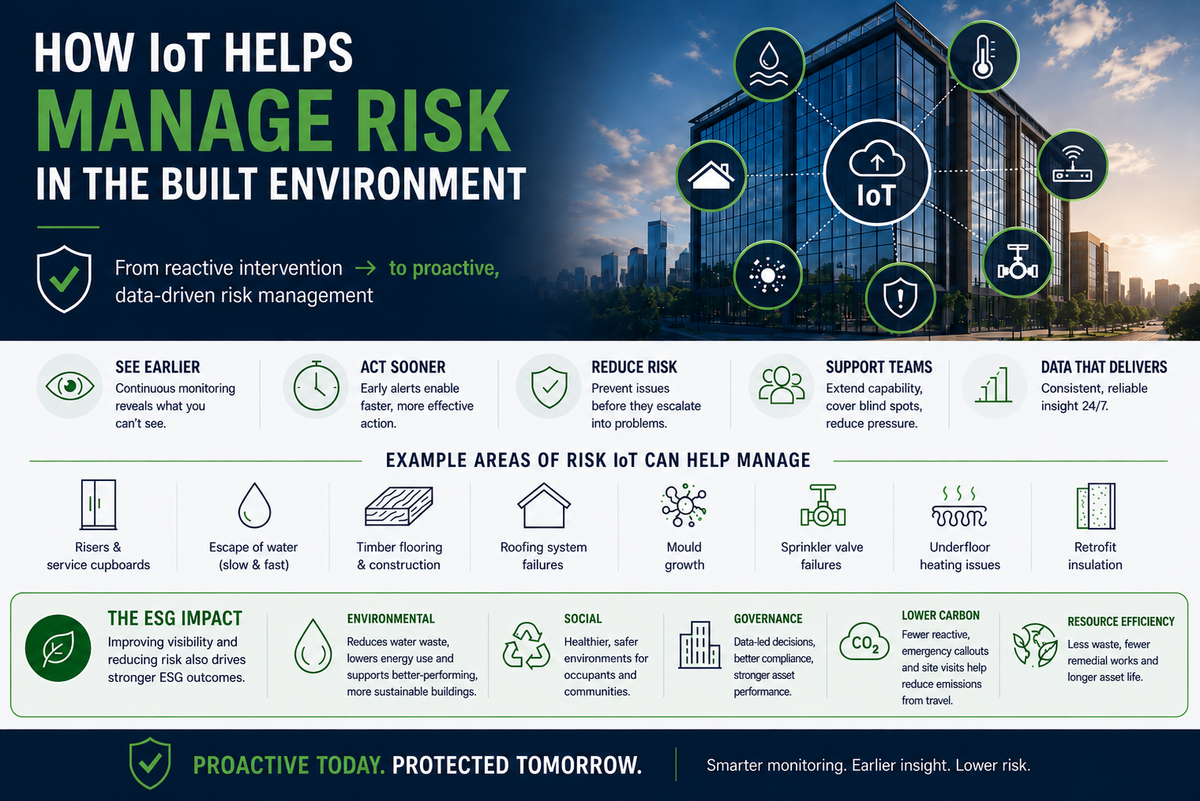
Examples include:
- Risers and service cupboards
- Escape of water (slow leaks and burst events)
- Timber flooring and construction materials
- Roofing system failures
- Mould growth
- Sprinkler valve failures
- Underfloor heating issues
- Retrofit insulation performance
⟫ These are not edge cases — they are common, recurring sources of disruption and cost
Consistency where it matters
Another reality:
Service and technical expertise can vary.
That’s not a criticism — it’s simply a function of:
- Scale
- Resource constraints
- Complexity of estates
IoT brings something different:
⟫ Consistency
- Continuous monitoring
- Defined thresholds
- Data-led alerts
- 24/7 visibility
- Predicitive insights - looking into the future
⟫ The system doesn’t get tired
⟫ It doesn’t miss checks
⟫ It doesn’t vary in approach
Working alongside existing teams
IoT is not a replacement for service teams.
It works best when deployed to:
- Support
- Enhance
- Extend their capability
⟫ Covering blind spots
⟫ Prioritising where attention is needed
⟫ Reducing unnecessary site visits
The takeaway
Managing risk in the built environment isn’t just about responding well.
It’s about:
- Seeing earlier
- Acting sooner
- Reducing exposure before issues escalate
- Positively impacts ESG levels
IoT enables that shift.
From:
Reactive intervention
To:
Proactive, data-driven risk management
If this is relevant to what you're working on, feel free to reach out.
#IoT #SmartBuildings #BuiltEnvironment #RiskManagement #DataDriven #DigitalTransformation #PropTech #OperationalEfficiency #BuildingPerformance #SustainabilityRisk in the built environment is often managed reactively.
Something happens → it’s identified → it’s fixed.
But the reality is:
a lot can happen between checks.
In many cases, issues develop slowly — building into more significant problems over time.
From reactive to proactive
This is where IoT plays a critical role.
By continuously monitoring conditions, IoT enables organisations to:
• Identify issues earlier
• Respond faster
• Reduce the likelihood and impact of failure
⟫ The shift is simple but powerful:
From reacting to events → to managing risk proactively
The reality of stretched resources
Service and technical teams are more stretched than ever.
Even in organisations with large teams:
• Coverage is not continuous
• Site visits are periodic
• Priorities shift constantly
⟫ Which means:
Blind spots are inevitable
This becomes even more challenging across:
• Multi-site estates
• Mixed building types
• Varying infrastructure quality
Where risk typically sits
Many risks develop in areas that are:
• Out of sight
• Not routinely checked
• Or slow to change — until they aren’t
Examples include:
• Risers and service cupboards
• Escape of water (slow leaks and burst events)
• Timber flooring and construction materials
• Roofing system failures
• Mould growth
• Sprinkler valve failures
• Underfloor heating issues
• Retrofit insulation performance
⟫ These are not edge cases — they are common, recurring sources of disruption and cost
Consistency where it matters
Another reality:
Service and technical expertise can vary.
That’s not a criticism — it’s simply a function of:
• Scale
• Resource constraints
• Complexity of estates
IoT brings something different:
⟫ Consistency
• Continuous monitoring
• Defined thresholds
• Data-led alerts
• 24/7 visibility
• Predictive insights — looking into the future
⟫ The system doesn’t get tired
⟫ It doesn’t miss checks
⟫ It doesn’t vary in approach
Working alongside existing teams
IoT is not a replacement for service teams.
It works best when deployed to:
• Support
• Enhance
• Extend their capability
⟫ Covering blind spots
⟫ Prioritising where attention is needed
⟫ Reducing unnecessary site visits
The ESG impact
There is also a growing ESG dimension to this.
Many building risks have a direct sustainability and operational impact:
• Water loss and hidden leaks increase waste
• Poor environmental control can drive unnecessary energy usage
• Building failures often result in material waste, remedial works and embodied carbon impact
• Reduced, reactive emergency callouts and unnecessary site visits can lower operational overhead and emissions
• Better-performing assets generally support stronger operational efficiency and sustainability outcomes
⟫ In many cases, improving visibility and reducing risk also positively impacts ESG performance.
The takeaway
Managing risk in the built environment isn’t just about responding well.
It’s about:
• Seeing earlier
• Acting sooner
• Reducing exposure before issues escalate
• Improving operational resilience and sustainability performance
IoT enables that shift.
From:
Reactive intervention
To:
Proactive, data-driven risk management
If this is relevant to what you're working on, feel free to reach out.
#IoT #SmartBuildings #BuiltEnvironment #RiskManagement #ESG #Sustainability #DataDriven #DigitalTransformation #PropTech #OperationalEfficiency #BuildingPerformance